
Liquid-cooled UQD quick connectors usher in opportunities
NVIDIA GB200 NVL4 high-power chip debuts, accelerating the innovation of supercomputing heat dissipation. As a key component of liquid cooling, UQD quick connectors debuted in the midst of change and ushered in the dawn of opportunity.
At the 2024 US Supercomputing Conference (SC24), a technology event that has attracted global attention, NVIDIA launched a new hardware product, the GB200 NVL4 superchip. The chip has shown relatively outstanding performance, has attracted widespread attention in the industry, and is expected to officially enter the market in the second half of 2025.
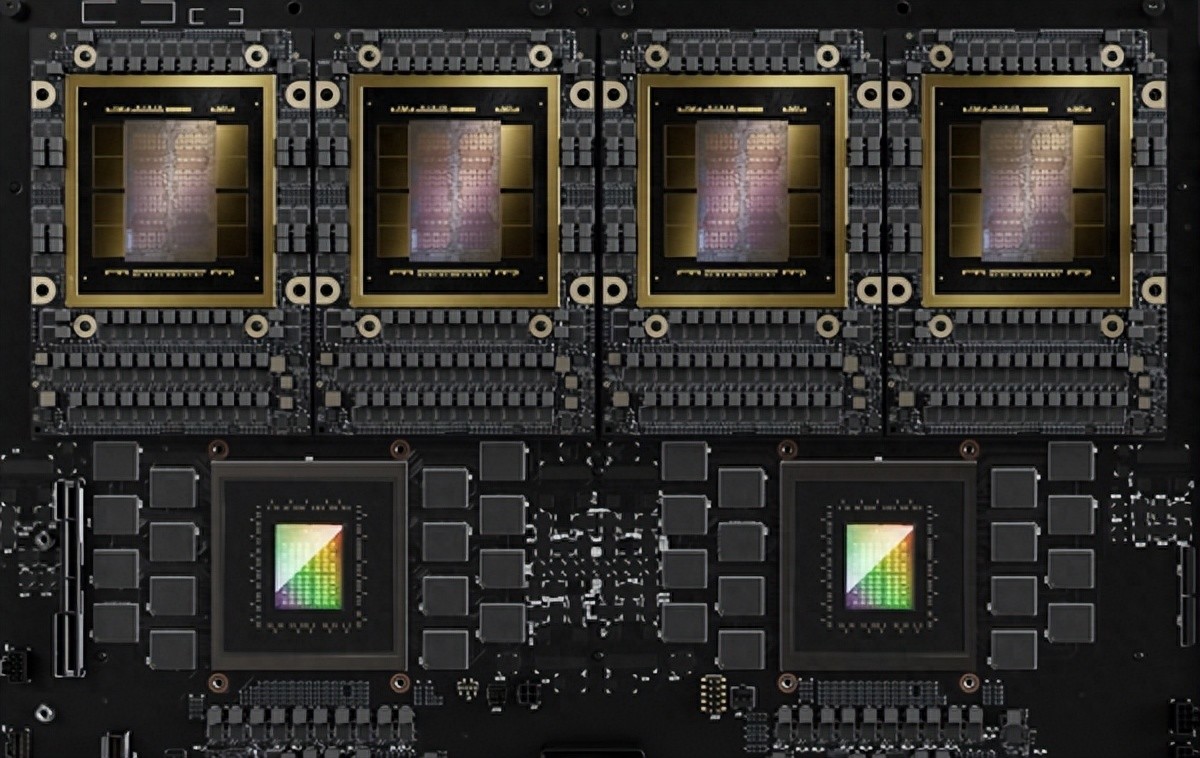
NVIDIA GB200 NVL4 superchip
Back in March 2024, the debut of GB200 NVL4 became a key driving force for the development of high-speed copper cables, opening a new chapter in technology linkage. Today, large artificial intelligence models are developing explosively, driving chip products to accelerate updates and iterations.
Due to the coexistence of performance improvement and power consumption growth of the GB200 NVL4 chip, the related heat dissipation problem has become a significant challenge. After the development of high-speed copper cables, liquid cooling solutions have the potential to become new market opportunities, and their development trend deserves further attention and research.
4 GPUs, 2 CPUs
Higher performance! But power consumption is not "lower"
NVIDIA's newly launched GB200 NVL4 module has attracted widespread attention. It is based on the original GB200 Grace Blackwell Superchip AI solution, and has been significantly expanded and optimized, bringing new possibilities for the processing of high-performance computing and artificial intelligence-related workloads.
GB200 NVL4 is designed as a single-server solution that integrates two Grace CPUs and four Blackwell B200 GPUs, and is equipped with a 4-GPU NVLINK domain and 1.3T coherent memory.
Specifically, the four Blackwell B200 GPUs of GB200 NVL4 are equipped with 768GB of HBM3E memory, which can provide a combined memory bandwidth of 32TB/s; the two Grace CPUs of GB200 NVL4 have 960GB of LPDDR5X memory. The memory configuration combination of GB200 NVL4 provides strong support for high-performance computing and AI workloads with certain complexity and intensity.
From the architectural point of view, the Blackwell architecture adopted by GB200 NVL4 further improves the utilization and scalability of GPUs, and optimizes the allocation and utilization efficiency of computing resources to a certain extent. In addition, the high-bandwidth GPU communication mechanism implemented by NVLink improves the overall computing efficiency and the smoothness of task execution.
In terms of performance, the simulation performance of GB200 NVL4 has been significantly improved compared with the previous generation GH200 NVL4 super chip. GB200 NVL4 has achieved an improvement of about 2.2 times, and the training performance and inference performance have also increased by about 1.8 times respectively.
However, it should be noted that the performance improvement is accompanied by an increase in power consumption. The power consumption of GB200 NVL4 reaches 5400W, which is about twice the power consumption of GB200 NVL2 model.
Such a high power consumption level of GB200 NVL4 means that an appropriate cooling solution is needed to ensure that the module can maintain a stable temperature during long-term operation and avoid performance degradation or failure due to overheating. NVIDIA has adopted liquid cooling technology since B100, and the GB200 NVL72 rack is also equipped with a liquid cooling system, which reflects a trend in the industry in terms of cooling technology.
According to media reports, GB200 NVL4 is expected to be used in server racks equipped with customized liquid cooling systems to ensure that the module can maintain a suitable operating temperature range during operation.
UQD Quick Connector
Key support for liquid cooling system
At present, with the continuous improvement of chip performance, power consumption is also increasing, which has prompted data centers and servers to put forward higher requirements for cooling technology. Liquid cooling technology has therefore been widely used and has broad market prospects.
According to Data Bridge Market Research, the data center liquid cooling market size reached $2.26 billion in 2022 and is expected to grow significantly to $13.45 billion by 2030, with a compound annual growth rate of 24.96% during the forecast period from 2023 to 2030.
However, in actual applications of liquid cooling, water leakage has always been the most critical hidden danger, and the joints are the most prone to water leakage. In this case, UQD quick connectors have become a key component to ensure efficient operation and maintenance of data centers with their advantages of no leakage, high flow, low flow resistance, and hot plugging.
The UQD quick connector standard is an open standard anti-spray quick-change connector specifically for data center liquid cooling applications, initiated by Intel and developed under the framework of OCP (Open Computing Project).
According to the Universal Quick Disconnect (UQD) Specification Revision 1.0 released by Mark Sprenger, Intel Corporation, UQD quick connectors have specific physical properties and include four sizes: 02/04/06/08. At the same time, flow level, temperature rating, pressure level, burst pressure rating, liquid loss during disconnection, and flow coefficient are clearly defined as key indicators of UQD quick connectors to ensure that their performance meets the strict requirements of data center liquid cooling systems.
In the specification, the specific performance requirements of UQD quick connectors include:
- Minimize the coupling and decoupling force of manually plugged connectors;
- Have a 5-year shelf life and a 10-year service life;
- The slot must be able to withstand 5,000 connection and disconnection cycles;
- Under 0 psi conditions, the maximum fluid loss of each coupling/disconnection cycle of different sizes must be controlled within a certain range; and under different sizes, the flow rate, pressure and temperature must meet the corresponding requirements.
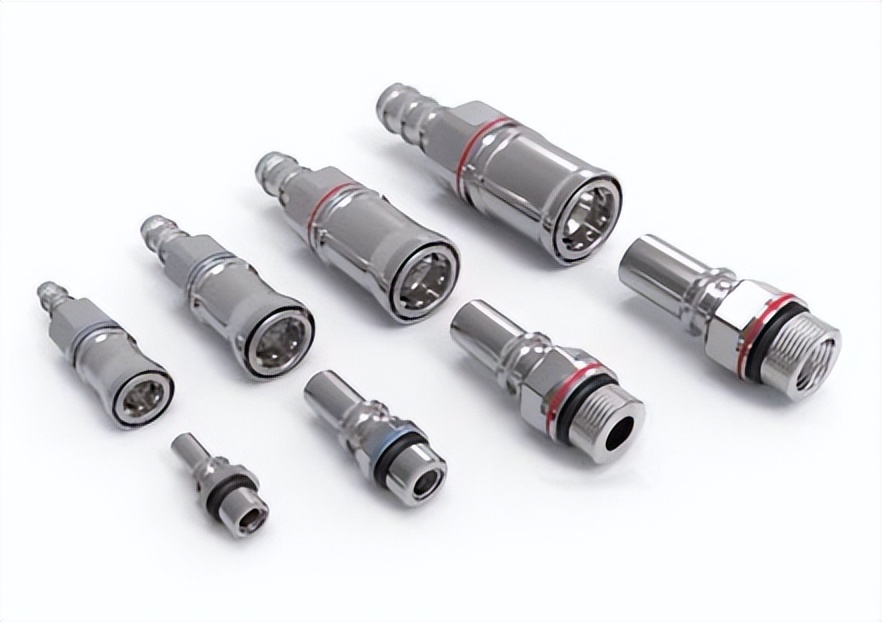
UQD Series Direct Push Fluid Connectors
With the further in-depth application of liquid cooling technology in various fields, the market demand for UQD quick connectors is showing a growing trend. In July 2024, Digtimes reported that Nvidia's liquid-cooled AI servers were blocked from shipping due to tight supply of UQD.
TrendForce's latest research shows that Nvidia's new generation Blackwell GB200 server will also enter mass production and shipment in the third quarter of the second half of the year. It is expected that products such as GB200 and B100 will be officially released in the fourth quarter of this year to the first quarter of 2025. The demand for UQD quick connectors is expected to further expand, and its market potential is worthy of attention.
Summary
As chip performance improves and power consumption increases, the scale of liquid cooling technology applications will expand. In the application of liquid cooling technology, UQD quick connectors are key components of liquid cooling. With the high performance and large-scale development of data centers and the expansion of artificial intelligence application scenarios, the market prospects of UQD quick connectors are broad and the potential is huge, which deserves the attention of global technology practitioners and investors.